
Our bones and joints help us walk, run, bend, and play. Ligaments are strong bands that connect bones and help keep joints steady. A fall, sudden turn, or sports injury can stretch or tear a ligament. An orthopaedic specialist for ligament injury can check the damage and guide you towards the right care. Early treatment can help protect the joint and support a safe return to daily work and sports.
A ligament injury may cause pain, swelling, and trouble moving a joint. Some people may find it hard to walk or put weight on the injured leg. Others may feel that the knee or ankle is loose or may give way. Rest may help some small injuries, but a serious tear needs medical care. Knowing when to see a knee doctor can help you avoid further harm and get the right treatment.
What Is a Ligament Injury?
Ligaments are strong bands of tissue that connect one bone to another. They help keep your joints steady when you move.
A ligament can get hurt when a joint twists, bends too far, or takes a hard hit. The injury may be mild or severe.
There are three common levels of ligament injury:
- Mild injury: The ligament is stretched.
- Medium injury: The ligament is partly torn.
- Severe injury: The ligament is fully torn.
Ligament injuries often affect the knee, ankle, wrist, and shoulder. Knee ligament injuries are common in sports that involve running, jumping, or quick turns.
What Are the Signs of a Ligament Injury?
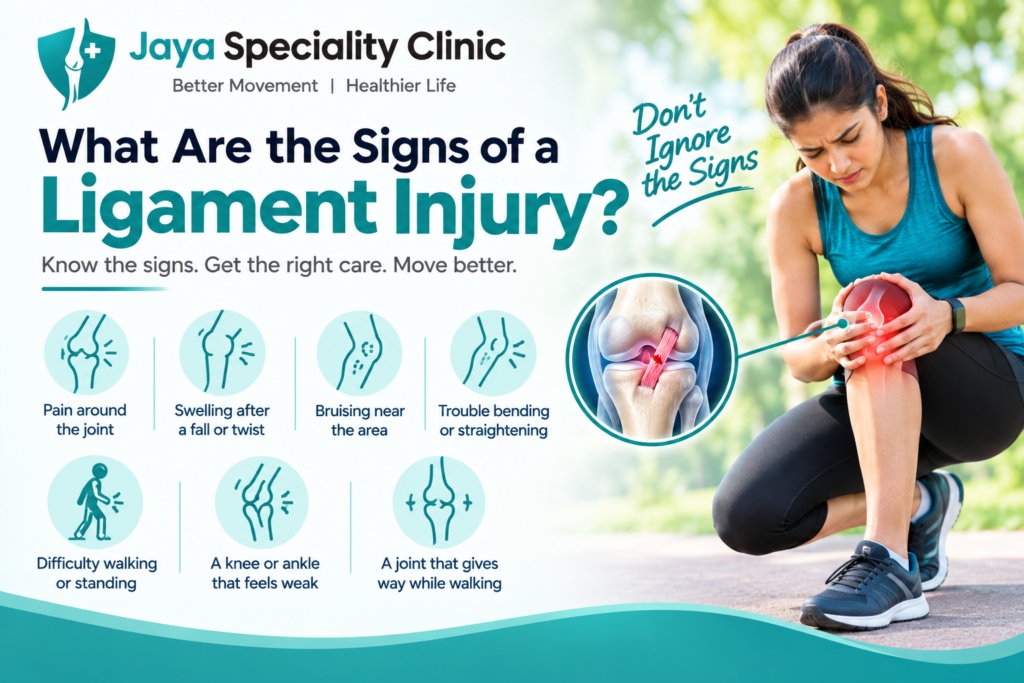
Watch for these signs:
- Pain around a joint.
- Swelling after a fall or twist.
- Bruising near the injured area.
- Trouble bending or straightening the joint.
- Trouble walking or standing.
- A joint that feels weak or loose.
- A knee that gives way while walking.
These signs do not always mean that a ligament is torn. A doctor can check the joint and find the likely cause.
If you have severe pain, a joint that looks out of place, or cannot put weight on your leg, seek urgent medical care.
When Should You See an Orthopaedic Specialist?
You should see an orthopaedic doctor if you have:
- Pain that does not get better.
- Swelling that stays or gets worse.
- Trouble walking or moving the joint.
- A knee that feels loose.
- Pain after a fall or sports injury.
- Trouble bending or straightening your knee.
- Repeated pain during exercise or daily work.
Do not keep playing sports when you have pain or swelling. This may make the injury worse.
Seek urgent care if you cannot stand on the injured leg, have severe pain, or notice that the joint looks out of place.
What Does an Orthopaedic Doctor Treat?
An orthopaedic doctor treats problems that affect bones, joints, muscles, ligaments, and tendons.
These problems include:
- Knee pain.
- Shoulder pain.
- Back and neck pain.
- Broken bones.
- Ligament tears.
- Muscle injuries.
- Joint swelling and stiffness.
- Sports injuries.
- Arthritis and other joint problems.
An orthopaedic doctor checks your symptoms and helps find the cause. The doctor then explains the treatment options that may suit your condition.
Do Orthopaedic Doctors Treat Muscle Pain?
Yes. Orthopaedic doctors can check muscle pain, especially when it starts after exercise, a fall, or a sports injury.
Muscle pain may happen when you stretch a muscle too far or use it too much. You may feel pain, tightness, or weakness.
Mild pain may improve with rest. But you should see a doctor if the pain is severe, keeps coming back, or makes it hard to move.
Pain may also come from a ligament, tendon, joint, or nerve problem. A medical check can help find the cause and guide the right care.
When Should You See a Knee Doctor?
The knee helps you stand, walk, climb stairs, and play sports. A knee injury can make these daily tasks hard.
You should see a knee pain specialist if you have:
- Knee pain after a sudden twist.
- Swelling after a fall.
- Trouble walking or climbing stairs.
- A knee that locks or gives way.
- Pain that keeps coming back.
- Trouble fully bending or straightening the knee.
A knee doctor may check how the joint moves and how strong it feels. An X-ray or MRI scan may be needed in some cases.
Do not ignore knee pain that affects your daily life. Early care can help you understand the problem and choose the next step.
Ligament Injury Treatment: Step by Step
Treatment depends on which ligament is hurt and how badly it is damaged. Here are the main steps.
Step 1: Stop the Activity
Stop playing or exercising as soon as you feel sudden pain. Do not try to keep going.
Step 2: Protect the Joint
Avoid movements that make the pain worse. If your knee or ankle hurts, do not force yourself to walk on it.
Step 3: Use an Ice Pack
Wrap an ice pack in a thin towel and place it on the injured area for 15–20 minutes at a time. Never place ice directly on the skin.
Step 4: Get Medical Advice
A doctor will ask how the injury happened and check the joint. The doctor may suggest a scan if needed.
Do not try to test a painful joint by twisting it or bending it too far.
Step 5: Follow the Treatment Plan
Ligament injury treatment may include:
- Rest and changes to daily activity.
- A brace or support.
- Medicine advised by a doctor.
- Physiotherapy and simple exercises.
- Surgery for some serious tears.
Not every ligament injury needs surgery. The best plan depends on the injury, the joint, and your daily needs.
Step 6: Build Strength Slowly
After the first stage of care, your doctor or physiotherapist may suggest exercises. These can help improve movement, strength, and balance.
Start slowly. Do not return to hard exercise before your joint is ready.
Step 7: Return to Normal Activities Safely
Do not judge recovery by pain alone. The joint also needs enough strength and control.
Follow your doctor’s advice before returning to sports, running, or heavy work.
Can a Ligament Injury Heal Without Surgery?
Yes. Some ligament injuries can heal with rest, support, and physiotherapy. A small tear may need less treatment than a full tear.
A serious tear may need surgery, especially if the joint is very loose or the injury affects daily life and sports. The doctor will check the injury before advising surgery.
Do not choose treatment based only on online advice. The right care depends on your injury and how well the joint works.
How Can You Prevent Ligament Injuries?
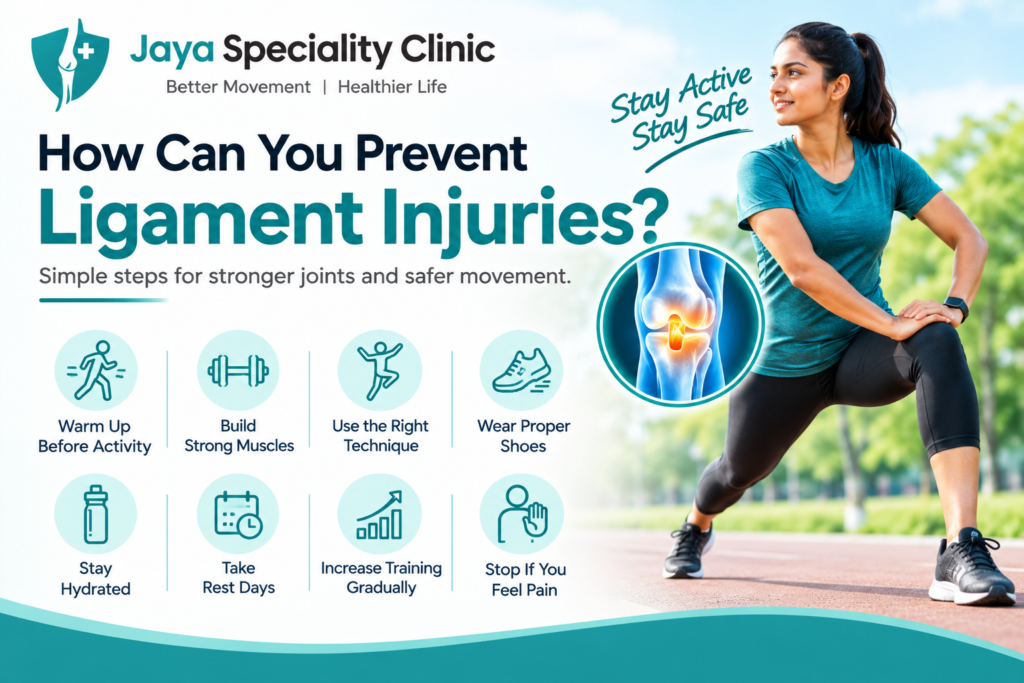
You cannot prevent every injury, but these simple steps can lower your risk.
- Warm up before sports and exercise.
- Build strong muscles around your joints.
- Learn the right way to jump, land, and turn.
- Wear shoes that fit well.
- Increase exercise slowly.
- Take rest when your body needs it.
- Stop playing when you feel pain.
- Follow your recovery plan after an injury.
These habits can help keep your joints strong and steady.
How to Choose the Best Orthopaedic Doctor
When looking for the best orthopaedic doctor, choose a doctor who can check your injury, explain the cause, and discuss your care options clearly.
Look for a doctor with experience in joint and ligament problems. Ask questions about your treatment, recovery, and when you can return to normal activities.
If you have knee pain, ask whether you need a knee check, a scan, or physiotherapy. You should understand your treatment plan before you begin.
About Jaya Speciality Clinic
Jaya Speciality Clinic is in West Mambalam, Chennai. The clinic offers orthopaedic care for bone, joint, muscle, and movement problems.
Dr. Balachandar M is an orthopaedic specialist who treats a range of joint and sports-related problems. If you have a ligament injury, knee pain, shoulder pain, or pain after sports, you can seek advice about your condition and treatment options.
Treatment depends on the type and level of the injury. It may include medicine, physiotherapy, exercises, or other care when needed.
If pain or swelling makes it hard to walk, work, or play sports, do not ignore it. A medical check can help you understand the cause and choose the next step.
Contact Jaya Speciality Clinic
- Address: 18, Kodambakkam Road, Mettupalayam, West Mambalam, Chennai, Tamil Nadu 600033
- Phone: 94450 32227
- Email: info@jayaspecialityclinic.com
- Website: Jaya Speciality Clinic
Frequently Asked Questions (FAQs)
An orthopaedic doctor treats problems with bones, joints, muscles, ligaments, and tendons. This includes knee pain, sports injuries, and ligament tears.
Yes. They can check muscle pain caused by exercise, sports, or injury. They can also check whether the pain comes from a joint or ligament.
See a knee doctor if you have lasting pain, swelling, trouble walking, or a knee that feels weak or loose.
Some mild injuries can heal with suitable care. Serious tears may need a brace, physiotherapy, or surgery. A doctor can advise you on the right plan.
Healing time depends on the ligament and how badly it is hurt. Mild injuries may heal in weeks, while serious tears can take months.
No. Some tears can be treated without surgery. The choice depends on the injury, joint stability, activity needs, and medical advice.
It depends on the injury. Do not force yourself to walk if it causes severe pain or you cannot put weight on the leg. Seek medical care.
There is no single treatment for every injury. A doctor may suggest rest, a brace, physiotherapy, medicine, or surgery based on the damage.