

Shoulder pain can make simple daily tasks surprisingly difficult. Activities like reaching for a shelf, lifting a bag, combing your hair, or even getting dressed may become uncomfortable. While many people think shoulder pain is caused by muscle strain or overuse, persistent pain and stiffness could be signs of shoulder arthritis. Understanding arthritis of the shoulder symptoms and treatment can help you seek timely medical care and prevent the condition from affecting your daily life.
The encouraging news is that many patients experience significant relief when shoulder arthritis is diagnosed early. Depending on the severity of the condition, treatment may include lifestyle modifications, physiotherapy, medications, and other non-surgical options before surgery is considered.
What Is Shoulder Arthritis?
Shoulder arthritis is a condition in which the protective cartilage covering the shoulder joint gradually wears away. Healthy cartilage helps the bones glide smoothly during movement. As this cushioning breaks down, the bones begin to rub against each other, leading to pain, inflammation, stiffness, and reduced mobility. If you’re experiencing ongoing shoulder discomfort, learning more about shoulder pain treatment in Chennai can help you understand the available treatment options.
The shoulder has two main joints—the glenohumeral joint, where the upper arm bone meets the shoulder blade, and the acromioclavicular (AC) joint, where the collarbone joins the shoulder blade. Arthritis can affect either of these joints depending on the underlying cause.
The most common types of shoulder arthritis include:
- Osteoarthritis: Age-related wear and tear that gradually damages the shoulder joint.
- Rheumatoid Arthritis: An autoimmune condition that causes inflammation and affects the joint lining.
- Post-Traumatic Arthritis: Arthritis that develops after a previous shoulder injury, fracture, or dislocation.
Without timely diagnosis and appropriate treatment, shoulder arthritis may gradually worsen, making routine activities such as lifting your arm, dressing, or reaching overhead increasingly difficult.
What Causes Shoulder Arthritis?
Several factors can contribute to shoulder arthritis. While ageing is the most common cause, it is not the only one.
Common risk factors include:
- Natural wear and tear with age
- Previous shoulder injuries or fractures
- Repetitive overhead activities at work or during sports
- Rheumatoid arthritis and other inflammatory conditions
- Family history of arthritis
- Obesity, which can contribute to joint inflammation
People involved in sports such as cricket, badminton, tennis, volleyball, swimming, or weight training may place repeated stress on the shoulder joint over time. Early evaluation after an injury can help reduce the risk of long-term joint damage.
5 Early Symptoms of Shoulder Arthritis
Recognizing the warning signs early can help you receive treatment before the condition progresses.
1. Shoulder Pain During Movement
One of the earliest symptoms is pain while lifting your arm, reaching overhead, or carrying everyday objects. The discomfort may appear only during activity in the beginning but gradually become more frequent as the cartilage continues to wear down.
2. Morning Stiffness and Limited Shoulder Movement
If your shoulder feels stiff when you wake up or after resting for a long time, it could be an early sign of shoulder arthritis. The stiffness usually improves slightly as you begin moving, but it may return after periods of inactivity.
Over time, simple activities such as combing your hair, reaching behind your back, fastening a seat belt, or lifting objects above shoulder level may become increasingly difficult. As the joint becomes less flexible, your range of motion gradually decreases.
3. Grinding or Clicking Sensation
A grinding, clicking, or popping sound when moving the shoulder may occur as the cartilage wears away. This is known as crepitus and happens because the joint surfaces no longer glide smoothly.
Occasional clicking without pain is usually not a concern. However, if these sounds are accompanied by persistent pain, stiffness, or reduced shoulder movement, they should be evaluated by an orthopedic specialist.
4. Shoulder Pain That Worsens at Night
Many people with shoulder arthritis notice that their pain becomes more noticeable during the night, especially when lying on the affected shoulder. Night pain can make it difficult to find a comfortable sleeping position and may repeatedly interrupt your sleep.
Persistent night pain is an important symptom and should not be ignored, particularly if it continues for several weeks.
5. Weakness During Daily Activities
As pain and stiffness increase, you may begin avoiding certain shoulder movements without realizing it. Over time, this can weaken the surrounding muscles, making everyday activities more challenging.
If lifting objects, carrying shopping bags, driving, or reaching overhead has become difficult because of shoulder pain, it is advisable to seek an orthopedic evaluation before the condition progresses further.
Shoulder Arthritis vs Frozen Shoulder vs Rotator Cuff Tear
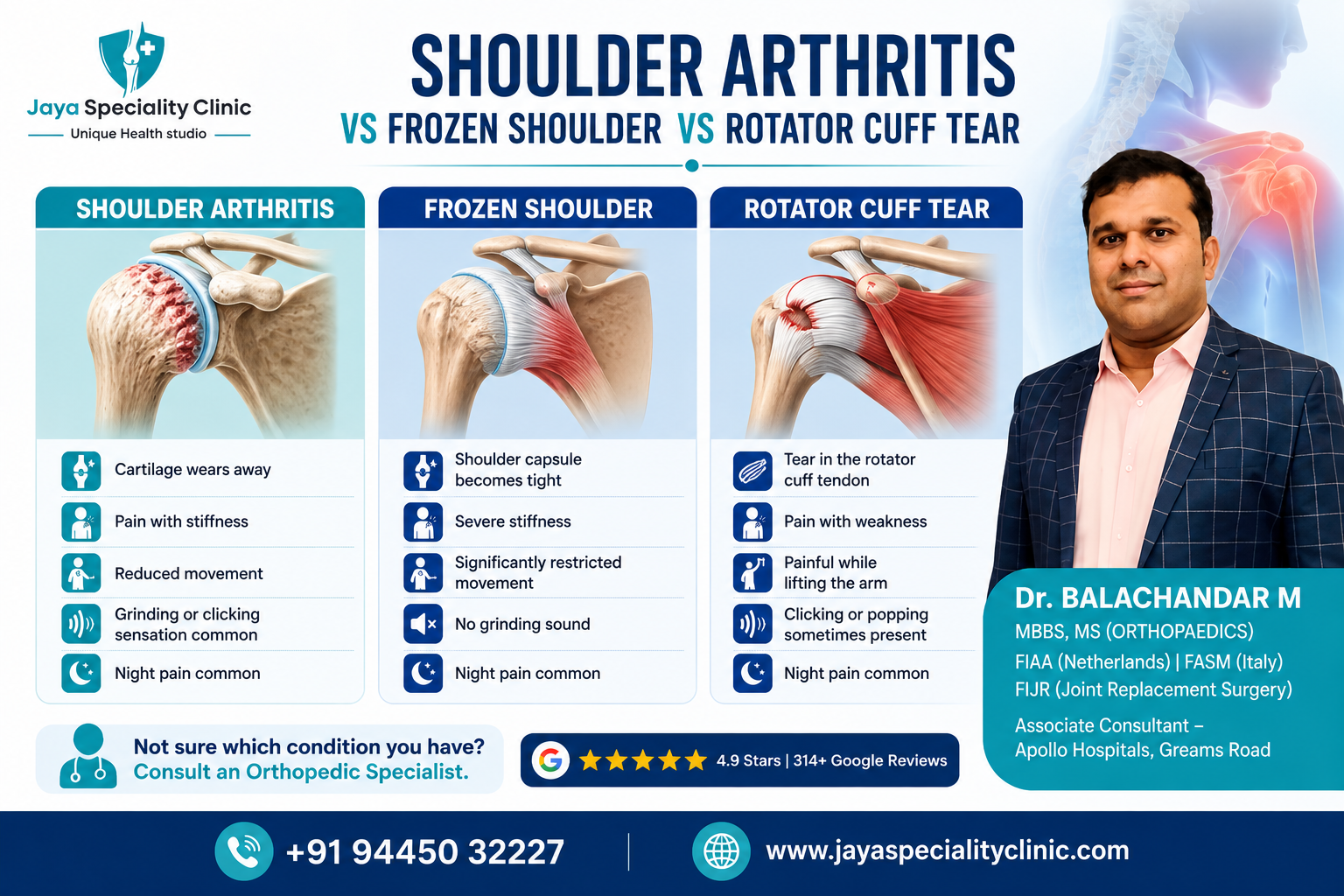
Shoulder pain can have several causes, and many conditions share similar symptoms. Understanding the differences can help you know when to seek medical advice.
| Feature | Shoulder Arthritis | Frozen Shoulder | Rotator Cuff Tear |
| Main symptom | Pain with stiffness | Severe stiffness | Pain with weakness |
| Shoulder movement | Gradually reduced | Significantly restricted | Painful while lifting the arm |
| Night pain | Common | Common | Common |
| Clicking or grinding | Often present | Rare | Sometimes present |
| Common cause | Cartilage wear | Tightened joint capsule | Tendon injury or tear |
Although these conditions may feel similar, they require different treatments. A proper examination and imaging studies help identify the exact cause of shoulder pain.
How Is Shoulder Arthritis Diagnosed?
An orthopedic specialist will begin by discussing your symptoms, medical history, and any previous shoulder injuries. During the examination, your shoulder’s movement, strength, and stability will be assessed.
Depending on your condition, your doctor may recommend:
- Physical examination
- X-rays to evaluate joint damage
- MRI scan if tendon or ligament injuries are suspected
- Blood tests when inflammatory arthritis is a possibility
An accurate diagnosis helps determine the most appropriate treatment and prevents unnecessary delays in care.
Arthritis of the Shoulder Symptoms and Treatment
Arthritis of the Shoulder Symptoms and Treatment
Treatment for shoulder arthritis depends on the severity of the condition and its impact on your daily life. In many cases, non-surgical treatment is the first approach and can help relieve pain while improving shoulder movement. To learn more about comprehensive arthritis treatment in Chennai , consult an orthopedic specialist for a personalized treatment plan.
Common treatment options include:
- Activity modification
- Physiotherapy to improve strength and flexibility
- Pain-relieving or anti-inflammatory medications
- Corticosteroid injections for selected patients
- PRP (Platelet-Rich Plasma) therapy for suitable patients after clinical evaluation
If symptoms persist despite conservative treatment and significantly affect your quality of life, your orthopedic surgeon may recommend procedures such as arthroscopy or shoulder replacement surgery.
When Should You Consult an Orthopedic Doctor?
Occasional shoulder discomfort after physical activity may improve with rest. However, persistent pain or stiffness should not be ignored, especially if it starts affecting your daily routine. Early diagnosis can help relieve symptoms, improve shoulder function, and prevent further joint damage.
Consult an orthopedic specialist if you experience:
- Shoulder pain lasting more than two weeks
- Difficulty lifting your arm or reaching overhead
- Pain that regularly disturbs your sleep
- Shoulder stiffness that limits daily activities
- Grinding or clicking with persistent pain
- Shoulder pain after a fall, sports injury, or accident
- Swelling, weakness, or reduced shoulder movement
If your symptoms continue despite home care, seek an orthopedic evaluation for appropriate diagnosis and treatment. Early intervention often provides better outcomes and may help delay or avoid surgery in suitable patients.
Frequently Asked Questions
Early symptoms usually include shoulder pain during movement, morning stiffness, reduced range of motion, grinding sounds, and discomfort that becomes worse at night.
Yes. Many patients with mild to moderate shoulder arthritis benefit from physiotherapy, activity modification, medications, and other non-surgical treatments. Surgery is generally considered only when conservative treatment no longer provides adequate relief.
No. Shoulder arthritis is caused by the gradual wearing away of joint cartilage, while frozen shoulder develops when the shoulder capsule becomes thick and tight. Although both conditions cause pain and stiffness, the treatment approach is different.
If you’re experiencing persistent shoulder pain or stiffness, you can consult Dr. Balachandar M at Jaya Speciality Clinic, West Mambalam, Chennai, for a comprehensive orthopedic evaluation and personalized treatment plan.
Yes. Jaya Speciality Clinic offers evidence-based non-surgical treatment options for suitable patients with shoulder arthritis. After a detailed assessment, your orthopedic specialist will recommend the most appropriate treatment based on your condition and lifestyle.
About Jaya Speciality Clinic
⭐ 4.9 Stars | 314+ Google Reviews
Jaya Speciality Clinic is a trusted Ortho Clinic in Chennai, Tamil Nadu, providing comprehensive orthopedic care with a patient-first approach. Conveniently located in West Mambalam, the clinic serves patients from T. Nagar, Kodambakkam, Ashok Nagar, Vadapalani, KK Nagar, Saidapet, Guindy, and surrounding areas.
Led by Dr. Balachandar M (MBBS, MS Orthopaedics), the clinic offers expert care for shoulder arthritis, sports injuries, knee arthritis, PRP therapy, arthroscopy, fracture care, and joint replacement surgery.
Conclusion
Recognizing arthritis of the shoulder symptoms and treatment early can help you manage pain, maintain shoulder movement, and continue your daily activities with greater comfort. Many patients respond well to timely diagnosis and non-surgical treatment, while surgery is reserved for advanced cases where conservative treatment is no longer effective.
If you have ongoing shoulder pain, stiffness, or difficulty using your arm, don’t wait for the condition to worsen. Consult an experienced orthopedic specialist to receive an accurate diagnosis and a treatment plan tailored to your needs.