
Osteoporosis in Chennai Women is becoming an increasingly common health concern, particularly after the age of 40. Often called the “silent disease,” osteoporosis develops gradually without obvious symptoms until a minor fall or everyday activity results in a fracture. Hormonal changes after menopause, nutritional deficiencies, sedentary lifestyles, and limited sunlight exposure can all contribute to weakening bones over time.
Many women in Chennai balance demanding careers, household responsibilities, and family commitments, leaving little time to focus on their own bone health. Unfortunately, osteoporosis is often diagnosed only after a fracture has already occurred. Early awareness, regular bone health screening, and healthy lifestyle choices can significantly reduce the risk of fractures and help maintain an active, independent life.
In this guide, you’ll learn the early warning signs of osteoporosis, understand its risk factors, discover practical prevention strategies, and know when to seek medical advice.
What Is Osteoporosis?
Osteoporosis is a condition in which bones gradually lose their density and strength, making them fragile and more likely to fracture. Healthy bones continuously rebuild themselves throughout life. However, after the age of 35, bone breakdown begins to occur faster than new bone formation. This process accelerates after menopause due to a sharp decline in estrogen levels, which play a vital role in maintaining bone strength.
Although osteoporosis can affect both men and women, women are at a much higher risk because they naturally have lower bone mass and experience rapid bone loss after menopause.
Common fracture sites include:
- Hip
- Wrist
- Spine
- Shoulder
These fractures can significantly affect mobility, independence, and overall quality of life if not diagnosed and treated early.
Why Are Chennai Women More Vulnerable?
Several lifestyle and environmental factors make osteoporosis in Chennai women a growing concern.
Common risk factors include:
- Menopause and declining estrogen levels
- Calcium and Vitamin D deficiency
- Limited exposure to sunlight despite Chennai’s tropical climate
- Lack of regular weight-bearing exercise
- Sedentary office jobs with prolonged sitting
- Smoking or excessive alcohol consumption
- Family history of osteoporosis
- Long-term use of corticosteroid medications
- Low body weight or poor nutrition
Women over 40 should be especially aware of these risk factors and discuss bone health screening with their healthcare provider if they have multiple risk factors.
10 Early Signs of Osteoporosis
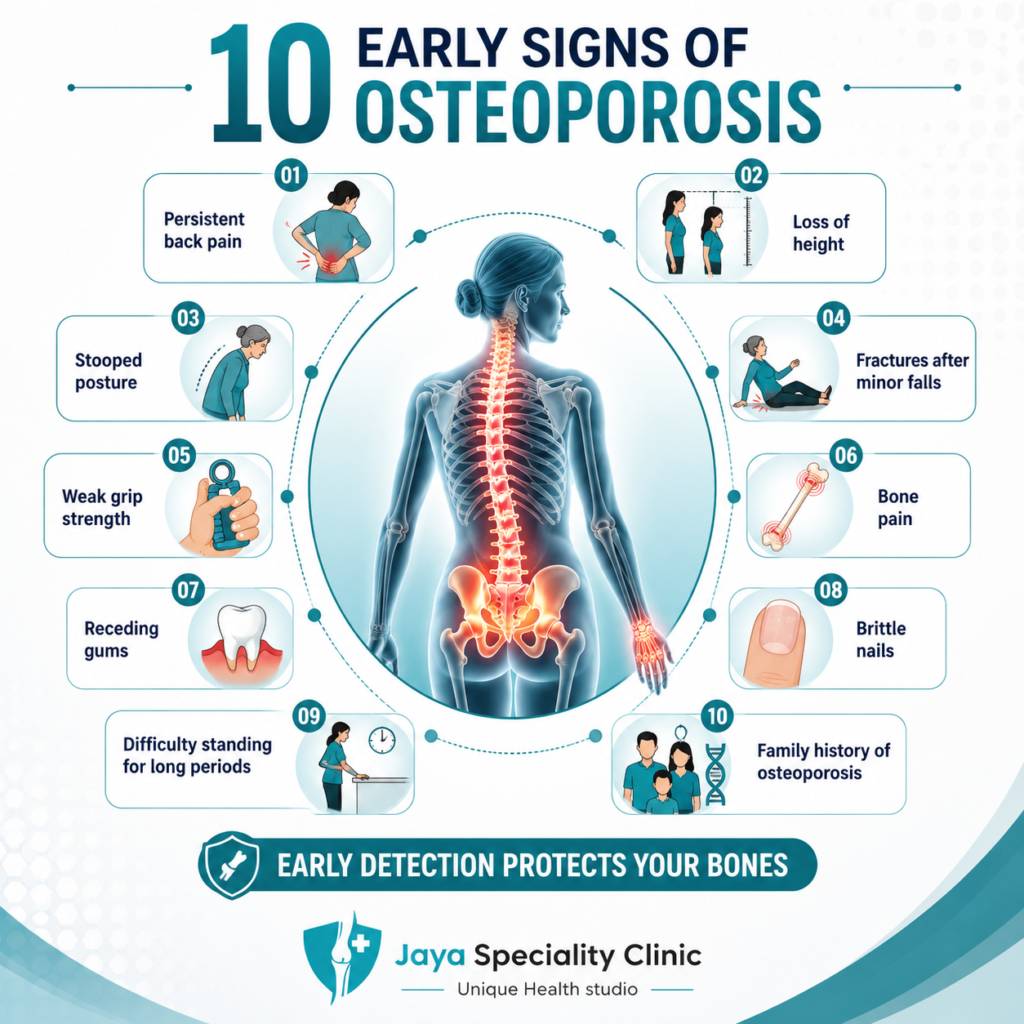
Osteoporosis usually develops silently, but several warning signs should not be ignored.
1. Persistent Back Pain
Gradual or unexplained back pain may indicate small compression fractures in the spine caused by weakened bones. If your back pain continues for more than two weeks or interferes with your daily activities, it is important to seek medical evaluation. Learn more about our Back Pain and Spine Treatment in Chennai for comprehensive diagnosis and personalized care.
2. Loss of Height
Losing more than two to three centimeters in height over time can be an early indication of spinal compression fractures associated with osteoporosis.
3. A Stooped or Curved Posture
As the bones in the spine become weaker, tiny compression fractures may develop over time. This can cause a noticeable forward curve of the upper back, commonly known as a “dowager’s hump.” Changes in posture should never be ignored, especially in women over 40.
4. Fractures After Minor Falls
One of the most common signs of osteoporosis is breaking a bone after a simple fall or minor injury. Fractures of the wrist, hip, shoulder, or spine often occur because weakened bones cannot withstand even mild trauma.
5. Reduced Grip Strength
Difficulty opening jars, carrying shopping bags, or holding household objects may indicate weakening bones and muscles. Although grip strength naturally declines with age, a sudden reduction should be evaluated.
6. Bone Pain
Some women experience persistent aching in their hips, lower back, or wrists. While bone pain may have several causes, osteoporosis should be considered, particularly after menopause.
7. Receding Gums
Bone loss can also affect the jawbone. Receding gums or loose teeth may sometimes be linked to reduced bone density, making regular dental check-ups important.
8. Weak or Brittle Nails
Frequent nail breakage alone does not confirm osteoporosis, but when combined with other symptoms, it may indicate poor bone and mineral health.
9. Difficulty Standing for Long Periods
Weak spinal bones can make standing for extended periods uncomfortable. Some women notice increasing fatigue or back discomfort while cooking, shopping, or performing household activities.
10. Family History of Osteoporosis
If your mother or close family member has osteoporosis or has suffered a hip fracture, your own risk is significantly higher. Regular screening becomes even more important if you have a strong family history.
How Is Osteoporosis Diagnosed?
Early diagnosis helps prevent fractures and long-term complications. Your orthopedic specialist will begin with a detailed medical history, evaluate your risk factors, and perform a physical examination.
The most reliable test for diagnosing osteoporosis is a Dual-Energy X-ray Absorptiometry (DEXA) scan, which measures bone mineral density and determines whether you have normal bone density, osteopenia, or osteoporosis.
Additional investigations may include:
- Blood tests to check calcium and Vitamin D levels
- Hormone evaluation when necessary
- X-rays to identify compression fractures
- Assessment of previous fracture history and fall risk
Women above 40, especially after menopause or those with multiple risk factors, should discuss bone density screening with their orthopedic specialist.
How Can Osteoporosis Be Prevented?
Although aging cannot be stopped, several healthy habits can significantly reduce the risk of osteoporosis in Chennai women.
Eat a Calcium-Rich Diet
Include foods such as:
Milk, curd, and paneer
Ragi (finger millet)
Sesame seeds
Almonds
Green leafy vegetables
Sardines and other calcium-rich fish
Maintain Adequate Vitamin D Levels
Vitamin D helps your body absorb calcium effectively. Safe morning sunlight exposure and medical supplements, when recommended by your doctor, can help maintain healthy levels.
Stay Physically Active
Weight-bearing exercises strengthen bones and muscles. Walking, climbing stairs, resistance training, yoga, and balance exercises all contribute to better bone health while reducing the risk of falls.
Treatment Options for Osteoporosis
If you are diagnosed with osteopenia or osteoporosis, early treatment can help slow bone loss, reduce fracture risk, and improve your quality of life. In many cases, non-surgical treatment is highly effective.
Common treatment options include:
- Calcium and Vitamin D supplementation
- Prescription medications to strengthen bones
- Weight-bearing and muscle-strengthening exercises
- Physiotherapy to improve balance and mobility
- Lifestyle changes, including quitting smoking and limiting alcohol intake
Some women with osteoporosis may also experience joint pain due to age-related wear and tear. Depending on your symptoms, your orthopedic specialist may recommend evaluation for related conditions. Learn more about our Arthritis Treatment in Chennai to understand available treatment options.
When Should You See an Orthopedic Doctor?
Do not ignore persistent symptoms, especially after the age of 40. Consult an orthopedic specialist if you experience:
- Persistent back pain lasting more than two weeks
- Noticeable loss of height
- A fracture after a minor fall
- A stooped posture that continues to worsen
- A strong family history of osteoporosis
- Early menopause with additional risk factors
Since osteoporosis can weaken the spine and increase the risk of compression fractures, ongoing back pain should always be evaluated. You can also learn more about our Back Pain and Spine Treatment in Chennai for comprehensive diagnosis and personalized care.
Early diagnosis allows treatment to begin before serious fractures occur.
Frequently Asked Questions
Common early signs include persistent back pain, gradual height loss, a stooped posture, fractures after minor falls, weak grip strength, and brittle nails. Since symptoms are often subtle, regular bone health screening is important after the age of 40.
Yes. Although aging and menopause cannot be prevented, osteoporosis in Chennai women can often be delayed through a calcium-rich diet, adequate vitamin D, regular weight-bearing exercise, maintaining a healthy lifestyle, and periodic DEXA scans for women with risk factors.
Foods rich in calcium and bone-supporting nutrients include ragi, sesame seeds, milk, curd, paneer, almonds, moringa leaves, and sardines. A balanced diet combined with sufficient vitamin D helps maintain healthy bones.
Women over 65 should undergo routine bone density screening. However, women aged 45 years or older with early menopause, vitamin D deficiency, long-term steroid use, previous fractures, or a family history of osteoporosis should consider getting a DEXA scan earlier.
Yes. Regular weight-bearing activities such as walking, stair climbing, yoga, resistance training, and balance exercises help maintain bone density, strengthen muscles, and reduce the risk of falls and fractures.
About Jaya Speciality Clinic
Jaya Speciality Clinic is a trusted Orthopedic Clinic in West Mambalam, Chennai, providing comprehensive care for osteoporosis, arthritis, spine disorders, sports injuries, and joint conditions. Led by Dr. Balachandar M (MBBS, MS Orthopaedics), our clinic focuses on early diagnosis, evidence-based treatment, and personalized care to help patients maintain strong bones, healthy joints, and an active lifestyle. Whether you need a bone health assessment, a DEXA scan referral, or treatment for osteoporosis-related complications, our team is committed to helping you achieve long-term musculoskeletal health.
Conclusion
Osteoporosis in Chennai women often develops silently, but its complications can have a lasting impact on daily life. The good news is that early screening, a calcium-rich diet, regular exercise, and healthy lifestyle choices can significantly reduce the risk of fractures and preserve bone strength after 40. If you notice warning signs such as persistent back pain, height loss, or fractures after a minor fall, don’t delay seeking medical advice. Early diagnosis and timely treatment are the best ways to protect your bone health and maintain an active, independent life.