
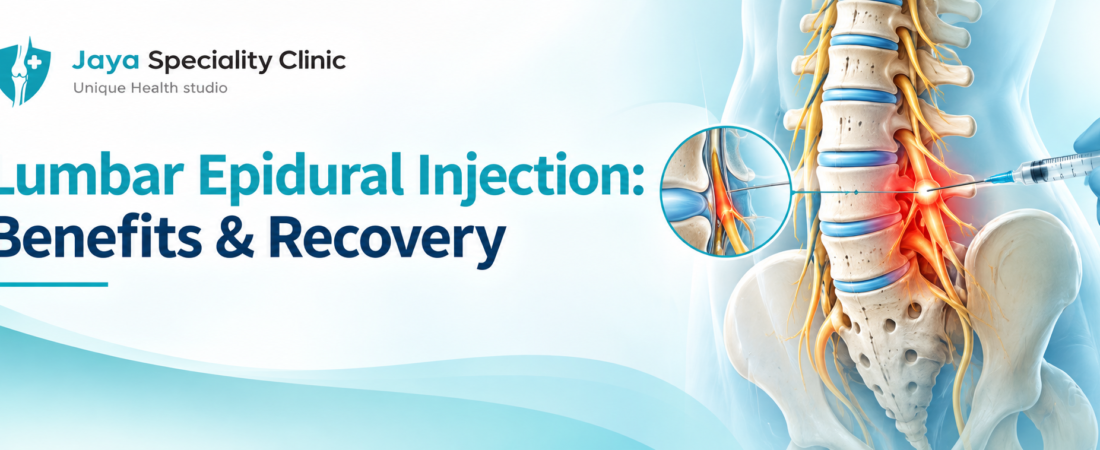
Lower back pain that travels into the buttock, thigh, calf, or foot can make everyday life difficult. Sitting for long hours, walking, climbing stairs, sleeping, or working may become uncomfortable. When this type of pain is related to irritation or inflammation around a spinal nerve, a lumbar epidural injection may be considered as part of a non-surgical treatment plan. The injection is designed to deliver medication close to the irritated nerve and may help reduce inflammation and pain.
The problem is often more than ordinary back pain. A compressed or irritated nerve in the lower spine can cause sciatica, with pain travelling from the lower back to one leg. A slipped or herniated disc, spinal narrowing, or other changes around the spine can irritate a nerve root. Patients may also notice tingling, numbness, burning pain, or weakness. Because several conditions can produce similar symptoms, finding the actual cause is important before deciding on an injection.
What Is a Lumbar Epidural Injection?
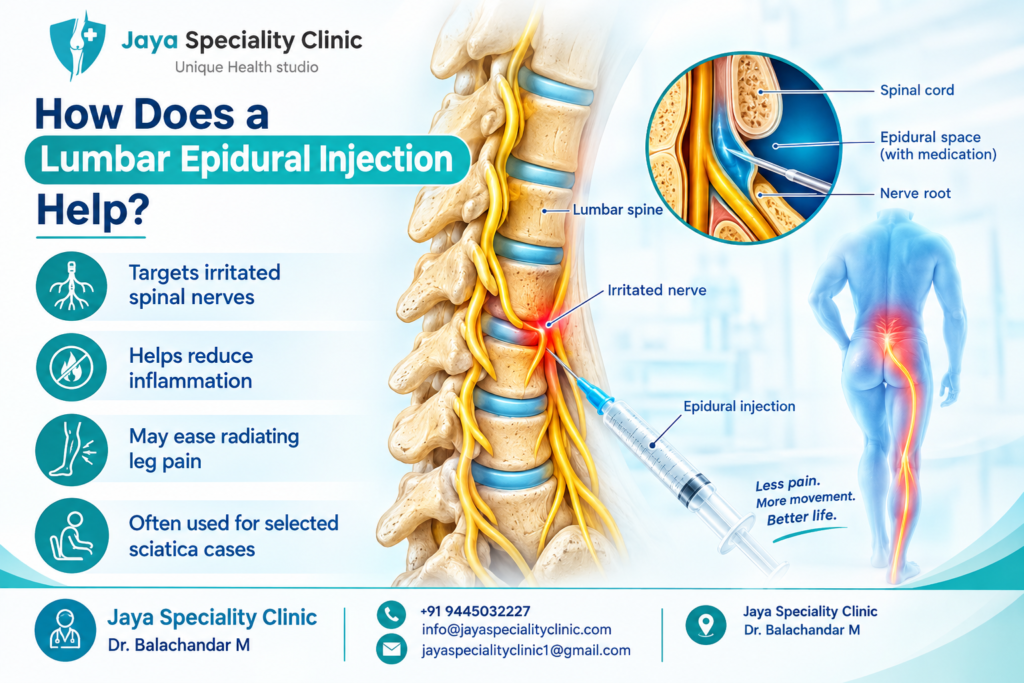
A lumbar epidural injection delivers medication into the epidural space around the nerves in the lower spine.
Depending on the treatment plan, the injection may contain a local anaesthetic and a corticosteroid. The local anaesthetic can provide temporary numbing, while the steroid is intended to reduce inflammation around irritated nerve roots.
The goal is usually to reduce pain enough for the patient to move more comfortably and participate in rehabilitation. It is important to understand that an epidural injection does not necessarily correct the underlying structural problem and is not a guaranteed permanent cure.
Why Does Sciatica Cause Leg Pain?
Sciatica is commonly associated with irritation or compression of a nerve in the lower back.
Instead of feeling pain only in the back, a person may experience:
- Sharp pain down one leg
- Burning or electric-type pain
- Tingling
- Numbness
- Leg or foot weakness
- Pain that becomes worse with certain movements
- Difficulty sitting or standing for long periods
The pattern of symptoms can provide useful clues, but a proper clinical assessment is needed to identify the cause.
How Can a Lumbar Epidural Injection Help?
The main aim is to reduce inflammation and pain around an irritated spinal nerve.
For appropriately selected patients with lumbar radiculopathy, evidence suggests epidural steroid injections can provide modest short-term pain relief. The 2025 American Academy of Neurology review found that benefits for radiculopathy are generally most noticeable in the short term, rather than being a permanent solution.
This temporary reduction in pain may be useful because it can make walking, daily activities, physiotherapy, and strengthening exercises easier.
Step-by-Step: How the Problem Is Managed
Step 1: Identify the Cause
The first step is understanding why the pain is occurring.
An orthopaedic specialist may ask about:
- Where the pain starts
- Whether it travels into the leg
- Numbness or tingling
- Weakness
- Previous injuries
- How long symptoms have been present
- Activities that increase or reduce pain
Depending on the symptoms, imaging may be recommended.
Step 2: Decide Whether an Injection Is Appropriate
Not everyone with back pain needs an epidural injection.
It may be considered when symptoms suggest nerve-related pain, particularly when simpler treatments have not provided enough relief.
The decision should take into account the diagnosis, severity of symptoms, previous treatment, medical history, and expected benefits.
Step 3: Prepare for the Procedure
Before the injection, the doctor will review your medications and medical history.
Tell your doctor about blood-thinning medicines, allergies, diabetes, infections, or other medical conditions. Your doctor will provide specific instructions about medicines, eating, drinking, and activity before the procedure.
Step 4: Position and Clean the Area
You will generally be positioned so that the lower back can be accessed safely.
The skin is cleaned using an antiseptic solution, and sterile precautions are followed.
Step 5: Guide the Injection
The doctor carefully places the needle toward the epidural space.
Depending on the technique and clinical setting, imaging such as X-ray or ultrasound may be used to help guide the procedure and confirm positioning.
You may feel pressure or pushing during the injection. Tell the doctor if you experience significant discomfort.
Step 6: Medication Is Delivered
The selected medication is delivered around the irritated nerve area.
The local anaesthetic may provide earlier temporary relief, while the corticosteroid can take longer to have an anti-inflammatory effect.
Step 7: Short Observation
After the procedure, you may be monitored for a short period before going home.
Temporary numbness or weakness can occur depending on the medication used, so patients may need assistance before walking safely.
Step 8: Begin Gradual Recovery
The injection should usually be viewed as one part of a larger treatment plan.
As pain settles, your doctor or physiotherapist may recommend gradual movement, walking, stretching, strengthening, and other rehabilitation exercises.
The aim is to improve function rather than simply rely on repeated injections.
Benefits of Lumbar Epidural Injection
For suitable patients, possible benefits include:
- Reduction in nerve-related leg pain
- Reduced inflammation around an irritated nerve
- Temporary improvement in movement
- Better ability to perform daily activities
- Potentially easier participation in physiotherapy
- A non-surgical treatment option for selected patients
However, results vary. Some people experience meaningful relief, while others may see slight improvement or none. Current evidence supports mainly short-term benefits for selected cases of radiculopathy, rather than promising permanent pain relief.
Lumbar Epidural Injection Recovery

Recovery is usually gradual.
Some patients notice relief quickly because of the local anaesthetic. The steroid component may take several days to work, and the maximum effect can take longer. Some hospital guidance notes that the effect may take up to about a week, while individual responses vary considerably.
You may experience mild soreness or a temporary increase in pain after the procedure. This discomfort usually settles, but instructions from your treating doctor should always take priority.
During recovery:
- Follow your doctor’s activity instructions
- Avoid strenuous activity initially.
- Continue gentle movement as advised
- Begin rehabilitation gradually
- Do not suddenly return to heavy exercise.
- Attend recommended follow-up appointments
Bed rest is generally not the goal. Gradually increasing activity can help restore movement and back-muscle strength.
How Long Does Pain Relief Last?
There is no fixed duration.
Some patients may experience relief for a short period, while others may have longer-lasting improvement. Some people do not respond to the injection.
Evidence for lumbar radiculopathy suggests the main benefit is generally short-term. Therefore, the injection should be considered as part of an overall treatment strategy rather than a permanent cure.
Possible Risks and Side Effects
Like any medical procedure, lumbar epidural injections have potential risks.
Temporary effects may include:
- Injection-site soreness
- Bruising
- Temporary increase in pain
- Temporary numbness or weakness
- Changes in blood pressure
- Medication-related side effects
Rare but more serious complications can include infection, bleeding, allergic reactions, nerve injury, or other neurological complications. Your doctor should discuss the individual risks and benefits before the procedure.
When Should You See a Specialist?
Do not ignore back pain that keeps returning or begins affecting your legs.
An orthopaedic evaluation is especially important if you have:
- Persistent sciatica
- Numbness or tingling
- Leg weakness
- Pain that limits walking
- Pain that affects sleep
- Symptoms that continue despite conservative treatment
- Repeated episodes of radiating leg pain
Severe or rapidly worsening weakness, loss of bladder or bowel control, or numbness around the groin/saddle area requires urgent medical assessment.
FAQ
It is an injection into the epidural space of the lower spine, usually containing a corticosteroid with or without a local anaesthetic, intended to reduce inflammation and pain around irritated spinal nerves.
Yes. It may be considered for selected patients with sciatica or lumbar radiculopathy, particularly when pain is related to an irritated or compressed nerve.
Not necessarily. An epidural injection may reduce inflammation and pain, but it does not physically repair or remove a herniated disc.
Some patients notice immediate temporary relief from the local anaesthetic. The steroid component may take several days to have an effect, and response varies from person to person.
The duration varies. Some patients experience relief for weeks or months, while others receive little benefit. Evidence generally supports short-term improvement for selected cases of radiculopathy.
Your activity should follow your doctor’s instructions. Gentle movement is often encouraged, while strenuous activity should generally be avoided initially.
No. It is an injection-based, non-surgical procedure. However, it should be performed by an appropriately trained medical professional.
No. The treatment is mainly considered for selected conditions, particularly nerve-related pain. Proper diagnosis is important before deciding whether an injection is appropriate.
About Jaya Speciality Clinic
Jaya Speciality Clinic is an orthopaedic clinic in West Mambalam, Chennai, providing evaluation and treatment for back pain, spine conditions, joint problems, sports injuries, ligament and tendon problems, and other orthopaedic concerns.
The clinic follows an individualised treatment approach, with non-surgical options considered where appropriate. Treatment may include medication, physiotherapy, injections, rehabilitation, and other interventions depending on the patient’s diagnosis.
Dr Balachandar M, MBBS, MS (Orthopaedics), is associated with Apollo Hospitals, Greams Road, Chennai, and provides orthopaedic care at Jaya Speciality Clinic.
Patients experiencing persistent lower-back pain, sciatica, or radiating leg pain can undergo an evaluation to understand the cause of their symptoms and discuss suitable treatment options.
Conclusion
Lower-back pain with leg pain can interfere with work, sleep, walking, and everyday activities. A lumbar epidural injection may provide short-term pain relief for selected patients with nerve-related lower-back and leg pain.
The most important step is not simply getting an injection. It is identifying the cause of the pain, deciding whether the procedure is suitable, performing it safely, and following a gradual rehabilitation plan afterward.
If you have persistent sciatica or radiating leg pain, an orthopaedic assessment can help determine whether a lumbar epidural injection or another treatment approach is appropriate for you.