
Robotic Joint Replacement and Surgical Services in Chennai
Advanced joint conditions can cause persistent pain and difficulty with movement. When non-surgical treatments are no longer sufficient, joint replacement or other surgical procedures may be considered after an individual medical assessment.
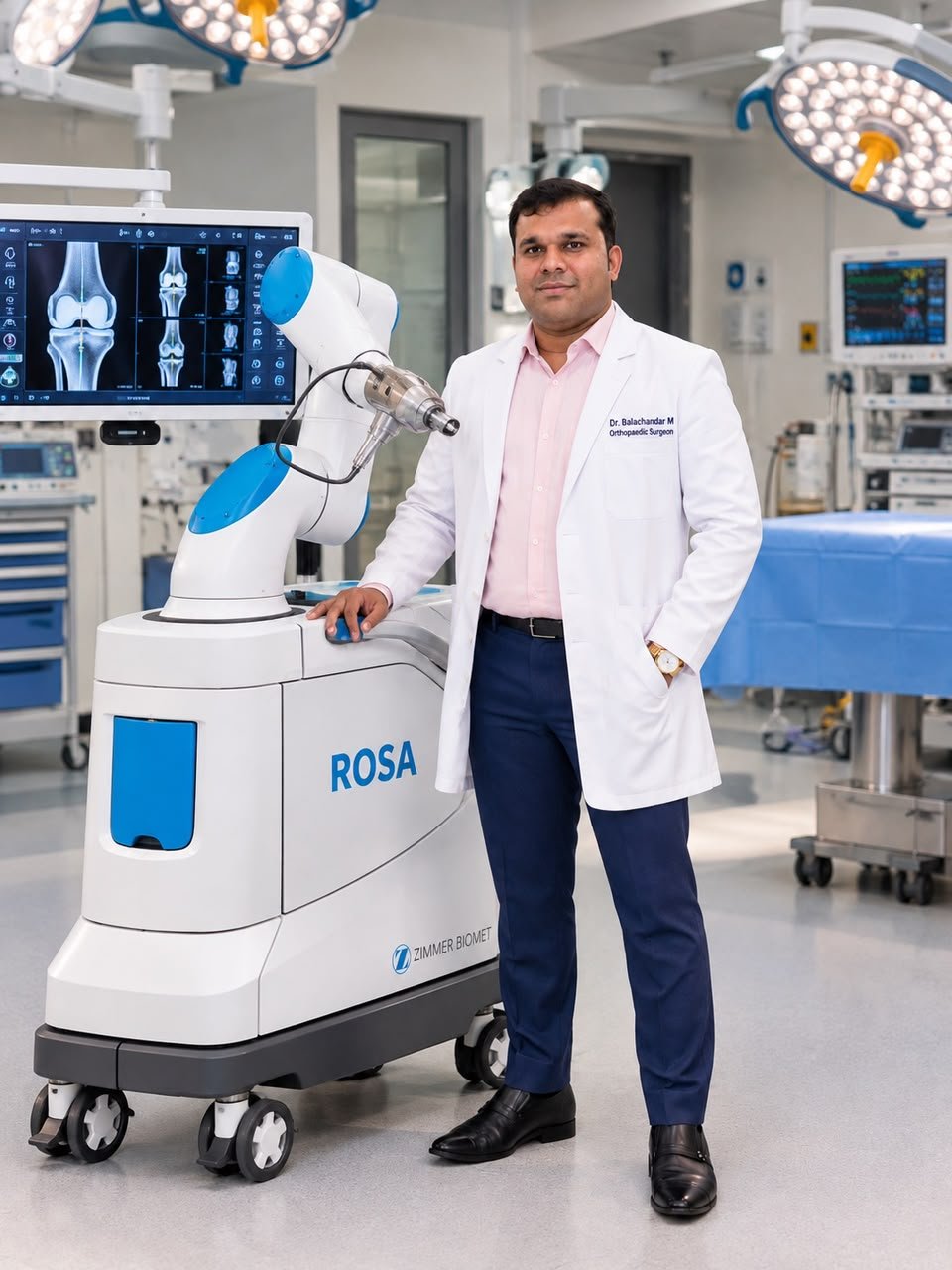
Robotic Joint Replacement and Surgical Care in Chennai
Joint conditions such as advanced osteoarthritis, severe cartilage damage, and certain injuries can cause persistent pain and difficulty with movement. When non-surgical treatments are no longer sufficient, joint replacement or other surgical procedures may be considered.
At Jaya Speciality Clinic, patients can seek medical evaluation and guidance regarding joint-related conditions and suitable surgical options. The recommended treatment depends on the patient's joint condition, symptoms, medical history, and overall health.
Dr. Balachandar M
MBBS, MS Orthopaedics
Seek orthopaedic evaluation and guidance about joint pain, knee and hip conditions, and possible treatment options.
Consult NowWhat Is Robotic Joint Replacement?
Robotic-assisted joint replacement is a surgical approach that uses advanced technology to assist surgeons during selected joint replacement procedures.
Robotic-assisted joint replacement may help with preoperative planning, bone preparation, and implant positioning, depending on the system used.
Robotic technology supports the surgeon's work but does not perform the surgery independently. The surgeon remains responsible for evaluating the patient, planning the procedure, and making clinical decisions.
Types of Joint Replacement Surgery
The recommended procedure depends on the joint affected, the extent of damage, symptoms, and the patient's overall health.
Robotic Knee Replacement
Knee replacement may be recommended for patients with advanced knee osteoarthritis or severe joint damage that causes persistent pain and restricted movement. Robotic-assisted technology may be used during selected procedures to assist with surgical planning and implant positioning.
Hip Replacement Surgery
Hip replacement involves replacing damaged portions of the hip joint with artificial components. It may be considered for severe osteoarthritis, certain fractures, or other conditions causing significant pain and loss of mobility.
Total Knee Replacement
Total knee replacement involves replacing damaged joint surfaces with artificial implants. It may be recommended when severe knee damage affects walking, standing, and everyday activities despite appropriate non-surgical treatment.
Other Orthopaedic Surgical Procedures
Depending on the diagnosis, other procedures may be considered for selected ligament injuries, meniscus damage, and joint-related conditions. The appropriate surgical approach depends on the extent and nature of the problem.
Potential Benefits of Robotic-Assisted Surgery
Robotic-assisted technology may offer certain surgical planning and precision-related advantages in selected procedures.
Preoperative Planning
Technology may support detailed planning before the procedure.
Bone Preparation and Implant Positioning
Robotic assistance may support aspects of bone preparation and implant positioning.
Intraoperative Assessment
Technology-assisted assessment may provide information during selected surgical procedures.
Procedure-Specific Planning
Robotic systems may support planning according to the procedure and the patient's anatomy.
The benefits and suitability vary depending on the patient, procedure, and technology used. Robotic-assisted surgery does not guarantee better outcomes or faster recovery compared with conventional surgery.
When Is Joint Replacement Surgery Required?
Joint replacement may be considered when:
- Advanced osteoarthritis causes persistent joint pain.
- Joint damage significantly restricts movement.
- Walking and routine activities become difficult.
- Non-surgical treatments no longer provide sufficient relief.
- Joint damage substantially affects quality of life.
Not every patient with joint pain requires surgery. Medication, physiotherapy, rehabilitation, and other appropriate treatments may be considered before recommending a surgical procedure.
Individualised Treatment Guidance
A clinical assessment helps determine whether non-surgical care or joint replacement may be appropriate for your condition.
Book Your ConsultationEvaluation and Preparation Before Surgery
A detailed medical assessment helps determine whether joint replacement or another surgical procedure is appropriate.
Medical History and Examination
Reviewing medical history and assessing joint movement, pain, and stability.
Imaging Investigations
X-rays or other imaging investigations may be used to assess the joint condition.
Surgical Fitness Review
Reviewing existing medical conditions and fitness for the proposed procedure.
The surgeon explains the recommended procedure and helps patients understand available treatment options, risks, alternatives, expected recovery, and rehabilitation requirements.
Recovery and Rehabilitation After Joint Replacement
Recovery depends on the type of surgery, overall health, and individual healing process. Rehabilitation plays an important role in restoring movement and improving joint function.
Pain Management and Wound Care
Postoperative care may include pain management and appropriate wound care instructions.
Guided Physiotherapy
Mobility exercises and physiotherapy may help restore movement and joint function.
Gradual Weight-Bearing
Weight-bearing and activity levels should progress as advised by the treating team.
Strengthening and Follow-Up
Muscle-strengthening, balance exercises, and regular follow-up consultations support the recovery plan.
Frequently Asked Questions About Robotic Joint Replacement
Find answers to common questions about robotic-assisted surgery and joint replacement options.
What is the difference between robotic and conventional knee replacement?
Robotic-assisted knee replacement uses technology to support surgical planning and certain steps of the procedure. Conventional knee replacement uses standard surgical instruments. Both require the surgeon to perform the operation and make clinical decisions.
Is robotic knee replacement suitable for everyone?
No. Suitability depends on joint damage, medical history, anatomy, and the surgeon's assessment.
When is hip replacement recommended?
Hip replacement may be considered when severe joint damage causes persistent pain and restricted movement that does not improve sufficiently with non-surgical treatment.
Does robotic surgery guarantee faster recovery?
No. Recovery varies between individuals and depends on several factors, including the procedure, overall health, and rehabilitation.
Is joint replacement the only treatment for severe joint pain?
No. Depending on the condition, medication, physiotherapy, rehabilitation, and other non-surgical approaches may also be considered.
Consult Jaya Speciality Clinic for Joint Replacement Guidance in Chennai
Living with persistent joint pain can affect your mobility and quality of life. Understanding your condition and available treatment options is important before making surgical decisions. Visit Jaya Speciality Clinic for an orthopaedic evaluation and guidance on knee replacement, hip replacement, robotic-assisted surgery, and other joint-related treatment options.
Book Your Appointment